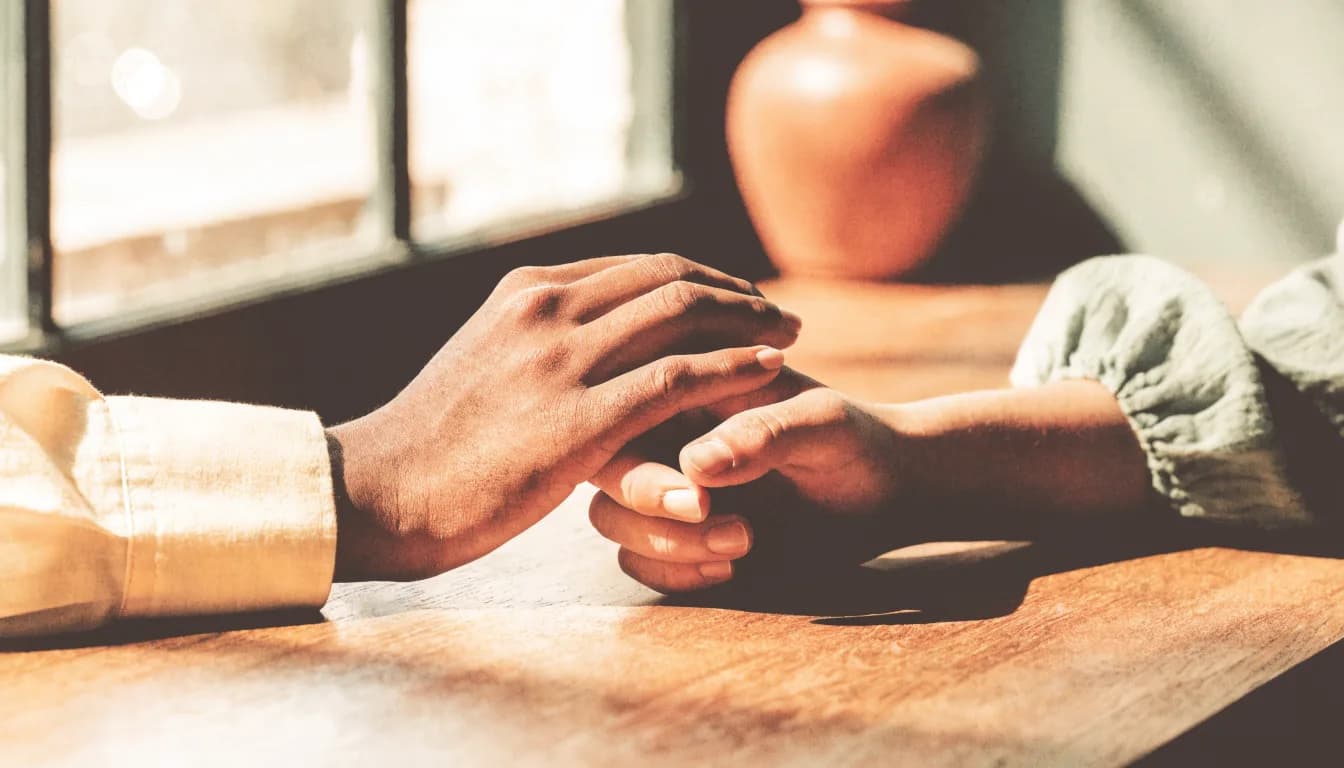

Blame is a major factor in marital conflict because it explains unwanted events and deflects attention from the underlying pain. Statements like "he makes me so angry" hand another person control of your behavior. Grounding yourself first, then asking whether your words serve the outcome you want, interrupts the pattern.
The sentences we all recognize
We have all been here.
"I reacted that way because she would not stop nagging me." "He makes me so angry." "I am the only one making any effort around here."
These are ordinary phrases and, at the root, they are all anchored in blame.
What is striking about them is what they concede. Each one hands another person control over your own words and behavior. Nobody can actually make you say or do anything — and believing otherwise is fertile ground for anger and frustration, because it means your conduct is permanently at the mercy of someone else's.
How often do we try to control a spouse or a situation and succeed only in making it worse? There is genuine comfort in the alternative: that you can change your outlook by looking inward instead of outward.
Why blame takes hold
Blame is a major factor in marital discord, and it is not confined to marriage. It also serves a broader human need — the need for an explanation.
We reach for it constantly. I blame the school board's bias for the letter that did not come. A mother who miscarries may find herself asking God why He allowed something so terrible. Someone may point to an illness or a disability as the reason for a life that has not gone the way they hoped.
Human nature placates and pacifies the underlying issue, which at its core is almost always pain.
That is the thing worth seeing clearly. In nearly every case — argument, tragedy, disappointment — blame is connected to a desire to dull the hurt. Looking outward at someone else means not having to be vulnerable to what you are feeling.
As the old saying has it: every time you point a finger in scorn, three fingers point back at you.
What sits underneath
If blame is anesthetic, the question becomes what it is anesthetizing.
Usually one of three things. Hurt — something landed and it mattered more than you want to admit. Fear — about the relationship, about being left, about not being enough. Or shame — a suspicion that some part of the accusation might be fair.
None of those are comfortable to sit with, which is exactly why the finger goes outward instead. Blame is faster and it feels better immediately.
The cost is that the underlying thing never gets addressed, so it comes back, and each time it does the blame has to get a little louder to do the same job.
One question that interrupts it
When you feel that discomfort and the urge to point the finger arrives, try this.
First, ground yourself in the present. That might mean a mindfulness practice, or a few deliberate breaths, or simply removing yourself from the room long enough to be alone with your own thoughts. The point is to create a gap between the feeling and the response, because in that gap you get your choices back.
Then ask one question: are the things I am about to say and do going to move this toward what I actually want?
It is a plain question and it is remarkably effective, because it shifts the frame from who is at fault to what you are trying to build. Most of what we say in the grip of blame does not survive contact with it.
What this does not mean
Two clarifications, because this idea can be misused.
It does not mean pretending an injury did not happen. Naming clearly that something hurt you is not blame; it is honest, and a relationship where that cannot be said is already in difficulty. The line is between describing the injury and its effect, and assigning responsibility for your own subsequent behavior to somebody else.
And it does not apply where there is abuse. Where one person is being harmed, responsibility belongs entirely with the person doing the harm, and the useful advice is about safety rather than about self-examination.
Short of that, though, the principle holds: the only behavior available for you to change directly is your own. That can feel like a smaller lever than you want. In practice it is usually the one that moves things.
Getting help with the pattern
Blame is much easier to see from outside than from inside it, which is a large part of why couples therapy helps here. A therapist can name the move as it happens, in the moment, before it has finished its work.
Our clinicians do this work in Orem, Murray, and online across Utah. Start with a free 30-minute consultation: 801.272.3420, text 801.997.8760, or book online.
Related care at Connections
Learn more: Marriage & Family Therapy.